
FAQ
Because a lot of the market is still charging customers for two things that should not be in the bill. First, avoidable engineering disorder: fragmented supply chains, fresh integration work, unstable interfaces, and all the meetings and rework that follow. Second, the cap-table tax. If a satellite provider has spent years burning large amounts of venture capital to get to the point where it is sitting in front of you, that return expectation usually ends up in your lap, in the price you pay. We spent nearly a decade building the platform properly and sidestepped equity investment entirely, so our prices are governed by the satellite and service, not by somebody else’s exit model.
Why are OrbAstro satellites priced so much lower than other providers?
The catch is that we do not sell the customer a project and pretend it is a product. We do not start with a thin skeleton, then bury the real satellite in optional extras, supplier handoffs, and open-ended NRE. We are not throwing together a fresh soup of ‘high-heritage’ but independently developed parts from a large catalogue and calling that a product. The catch is that we built the hard part first. We developed the platform stack together, from scratch, for comprehensive constellation operations, then kept refining the same core system across more than a dozen flight missions over nearly a decade. Standard terms. Fixed pricing. Reserved capacity. Compounding heritage. Controlled customisation, not endless improvisation dressed up as flexibility. A clean and real path from pilot mission to fleet.
No really, what’s the catch?
That folklore is mostly true when every mission is still a bespoke integration exercise. In that world, lower cost, higher quality, and shorter lead-time fight each other, because the system keeps resetting. We have iterated our way out of that trap. Standard baseline. Stable architecture. In-house subsystems and flight code. Generation-level qualification. Repeatable acceptance flow. Flat-Sat before flight hardware. Day-in-the-life rehearsal before launch. Learning that compounds across missions instead of dying in PowerPoint. And because we sidestepped venture capital, there is less financial drag forcing price away from what the customer actually needs. That is how you get all three. Deep vertical integrity and industrial discipline first. Then the economics follow.
But folklore says a supplier can never give you more than two of these: lower cost, higher quality, shorter lead-time?
Because it is cheaper. Starting with a bare-bones platform and custom-building it subsystem by subsystem around a pilot mission can sound efficient. It is actually the slowest and most expensive route to orbit. More decisions. More trade-offs. More fresh interfaces. More odd interactions between parts. More programme risk. More runway burned while everyone calls it flexibility. We took the opposite route. Our baseline platforms are deliberately constellation-grade from day one. That “overkill” removes uncertainty, cuts integration burden, reduces managerial overhead, gets you to orbit faster, and gives you a much cleaner path from pilot mission to fleet without needing to start all over.
Why are OrbAstro’s baseline satellites so over-specced?
The baseline is broader than “here is your bus, good luck.” The listed packages include Flat-Sat access, cloud Mission Control System access, payload integration support, flight acceptance testing, launch permit support for LEO, spectrum filing for S-band and Ka-band, secure storage before launch, satellite commissioning, and mission-control capability for operations and autonomous recovery from common faults. In other words, not just metal, but a usable route to orbit and operations.
What exactly is included in the baseline service?
Quickly enough that the proof still matters when it arrives. For standard nanosatellite missions, the flight unit typically takes about two months once payload interfaces are frozen and Customer CDR is complete. In practice, reaching CDR for a pilot mission is often 3-6 months, with roughly another 3 months to TRB, driven mainly by payload maturity and how quickly the customer can move. If the mission is straightforward and the customer is ready, contract signature to launch can be under six months. Our fastest ESPA-class mission so far was 5 months between contract kick-off and in-orbit operations. That matters because many constellation start-ups do not fail in orbit. They fail waiting for a pilot mission that arrives too late, costs too much, or proves too little. We compress the whole path, and because the platform, process, and ops model are built for constellation from day one, so when you move from pilot to fleet, you scale forward rather than start again.
How quickly can OrbAstro get us to orbit?
Usually faster than the market has trained you to expect. Because we design for batch production and build the stack under one roof, the AIT time per satellite is far shorter than the industry norm (days rather than months). Within our current 20,000 sq ft factory, we can realistically throughput up to 500 satellites per year, depending on the number of unique configurations and platform classes involved. Expanding capacity is relatively straightforward. In practice, the main throttle on throughput for a given customer is usually the upfront capital they are willing to commit to long-lead procurement, often 6 to 12 months out, coupled to the launch cadence they have secured.
How quickly can OrbAstro deliver our constellation?
Because your moat is probably not spacecraft manufacturing. A lot of start-ups ended up building satellites themselves because the old procurement model was too slow, too expensive, and too one-off to support fleets. That does not make it a good use of your time. Suddenly your team is managing spacecraft design, integration, licensing, launch paperwork, and mission operations instead of building the payload, proving the service, and winning customers. Those side-quests can add years of burn before revenue. Unless building satellites is your actual strategy, it is usually a very expensive detour that kills many start-ups before they get anywhere near revenue generation.
Why should we not just build our own constellation?
Yes. OrbAstro’s platforms and operations model are designed for constellation-grade use from day one, even when you begin with a reduced pilot mission. That matters because “pilot” too often becomes a polite synonym for “architectural dead end.” And even where mission growth eventually justifies moving to a larger satellite class, your team does not need to relearn the whole system. The OrbAstro Mission Control System and operational logic remain consistent whether you are flying a 10kg satellite or a 1,000kg one. So you scale forward, not start again.
Can we start small and scale without re-platforming?
Not unless you want one. OrbAstro’s operations package covers mission-control software, telemetry monitoring, ground-segment access, anomaly-response support, space-traffic support, and decommissioning support. You can hand over most of the space-side burden to us, or you can run day-to-day mission intent yourself while OrbAstro supports the platform, anomalies, and propulsion-related activities. Either way, you do not need to build a small bureaucracy just to keep a satellite alive.
Do we need our own spacecraft operations team?
Yes. The split is fairly clean. You remain responsible for payload requirements, payload functionality, payload command intent, mission priorities, and payload-specific obligations. OrbAstro handles the platform operations layer and the mechanics needed to execute safely within the agreed constraints. So you tell the system what commercial job needs doing. You do not need to tell reaction wheels how to feel about it. That is a much healthier division of labour.
Can we operate the payload ourselves?
By moving failure discovery forward, while it is still cheap and civilised. The platform uses standard electrical, mechanical, and software interfaces. Customers get Flat-Sat access for payload development and mission rehearsal, and OrbAstro uses early compatibility checks, unified AIT, and assembly planning before the flight unit is touched. That means more problems are found on a bench or in a lab, and fewer are discovered in a cleanroom with launch dates looming and blood pressure climbing; or worst, in orbit...
How does OrbAstro reduce integration risk?
Yes. That is one of the sharper parts of our model. OrbAstro ships a Flat-Sat and user manuals so customers can develop, test, and debug payload software and electrical interfaces at home. Then there is day-in-the-life rehearsal through the Mission Control System, and later a further day-in-the-life test campaign on the actual flight hardware before launch. It is not glamorous. It is simply how you reduce unpleasant surprises.
Can we test before touching the flight unit?
More fixed than the industry norm. The agreement says quite plainly that the terms are offered on a standard-terms basis to support rapid contracting, predictable delivery, and fixed pricing, and that OrbAstro does not negotiate the T&Cs customer-by-customer except for limited mission-specific necessities. The payment plan is also explicit: early milestones secure production capacity, long-lead procurement, engineering release, Flat-Sat availability, and price protection. That may sound stern. But that is how we ensure low prices and fast lead-times.
How fixed are your contract terms, really?
Some change is expected. The satellite configuration is frozen at Customer CDR, and standard optional extras do not need to be finalised until then. Before that point, there is room to refine the mission honestly rather than pretending the first guess was divinely inspired. After freeze, change becomes more formal and more expensive, which is fair.
What happens if our requirements change midstream?
We can. We can support launch procurement and management, launch-related documentation, export paperwork, launch permits, and spectrum filing. Our baseline package includes the paperwork for S-band and Ka-band communications, with extra support where payload-specific authorisations are needed. There is still bureaucracy. This is space. But the aim is that you spend your time on payload, customers, and business logic rather than learning a new religion called administrative compliance. And we're likely to get better terms than any customer could achieve in isolation.
Does OrbAstro handle launch, licensing, and spectrum?
Commissioning happens in two phases. First the platform is brought up, checked out, detumbled, deployables are verified, comms are demonstrated, pointing modes are exercised, and propulsion firing is tested. Then your payload is commissioned using the agreed method, usually with an OrbAstro Mission Operations Engineer supporting the process. After that, routine operations begin under either an OrbAstro-managed model or a shared model. So launch is not the finish line. It is just where physics starts grading the paperwork.
What happens after launch?
Yes. OrbAstro’s platforms and operations stack are designed to work with both OrbAstro ground infrastructure and selected third-party networks. Our satellites are already interoperable with providers such as AWS, KSAT, and LeafSpace, and the Mission Control System is built around telemetry, automation, ground-station infrastructure, and orbital infrastructure as one operating environment. In plain English, you are not locked into a single ground-segment model. We can support a managed OrbAstro setup, a hybrid model, or integration with customer-arranged third-party links where that makes operational sense. We can even provide you with your own S-band and Ka-band ground stations if required!
Can OrbAstro work with our own ground stations or third-party networks?
Usually, much less than you think. You do not need to build a full spacecraft company around your mission unless that is somehow your actual strategy. OrbAstro is built so customers can stay focused on their payload, IP, service logic, and customers, while we absorb most of the space-side burden. Some customers want only one or two technical people interfacing with us. Others want a small payload or mission team running day-to-day intent. Either way, you should not need to become chairman of the weekly satellite committee just to get to orbit and stay there.
What kind of internal team do we actually need to work with OrbAstro?
OrbAstro retains final operational authority over platform safety, safe-mode response, conjunction avoidance, decommissioning, and compliance with licence, spectrum, and orbital-debris obligations. It may also reject or delay commands it considers unsafe or non-compliant, and it can take urgent protective action without prior customer approval if delay would materially increase risk. That sounds strict because it is strict. Someone has to be the adult in the room when orbital safety and regulatory exposure are involved. Of course, some customers evolve into operators and take these responsibilities on themselves; we support that process.
Who has final authority on orbit?
Yes. And we mean properly support them, not merely make room for them. Even the nanosatellite baseline supports up to 2kW peak payload power, 16TB onboard storage, high-speed LVDS and gigabit interfaces, propulsion, and Ka-band downlink up to 2Gbps. Larger platforms (supporting payloads up to 1,000kg) step well beyond that, reaching up to 8kW peak payload power, 3.5kW solar generation, 4Gbps Ka-band downlink, and much higher delta-V. Just as importantly, the payload is backed by OrbAstro’s wider stack: robust ADCS, Flat-Sat development, repeatable AIT, ground stations, Mission Control, AI engine, 97 petaFLOP data centre, and end-to-end mission operations. The platform should enable the payload, not become its bottleneck.
Can OrbAstro support demanding payloads?
Yes. That is one of the main points of the OrbAstro model. We run a stable platform baseline, common flight-software baseline, and consistent operational playbooks across missions, so learning does not reset every time a new satellite is ordered. Validated improvements, fixes, and software updates can feed back into the same baseline platform and, where appropriate, be deployed fleet-wide, including in orbit, under strict configuration control and customer approval. The result is that newer missions sharpen what flies next, and operational experience can improve what is already in orbit.
Do software updates and operational improvements compound across missions?
Then the machinery for adult supervision starts earning its keep. OrbAstro provides anomaly-response support, telemetry monitoring, Mission Operations Reports, and a severity-based response framework. We are also honest about the limits: response targets are triage targets, not a guarantee of recovery, mission success, or payload performance. Reliability is not a branding choice. It is a system property. The useful question is what fails first, how it fails, and whether the spacecraft remains controllable and commercially useful afterwards.
What happens if something goes wrong in orbit?
Collision response and disposal are built into the operating model, not treated as paperwork for later. OrbAstro-managed operations include conjunction evaluation and collision-avoidance manoeuvres above a stated probability threshold, and decommissioning decisions are tied to spacecraft health, remaining propellant, regulatory obligations, and something OrbAstro calls "disposal confidence". Where feasible, disposal uses onboard propulsion for re-entry or graveyard transfer. That is just operator seriousness. Space has enough abandoned shopping trolleys already.
How do you handle collision risk and end-of-life?
Quite a few, and it is worth saying that out loud. Customer-side responsibility still includes payload performance, payload data, mission value, launch and in-orbit insurance decisions, many third-party failures, and risks outside OrbAstro’s control. The optional in-orbit platform warranty we provide is also narrow by design: it applies to Constructive Total Loss of the platform from qualifying platform defects, not to payload issues, launch vehicle failure, debris strikes, radiation, or general space bad luck. That is not a catch. That is honest risk allocation. If you are looking at alternative satellite providers and they are being vague about risk allocation, beyond recognising that the opacity is a red flag in itself, assume it sits with you.
What risks still sit with us?
Any other questions?
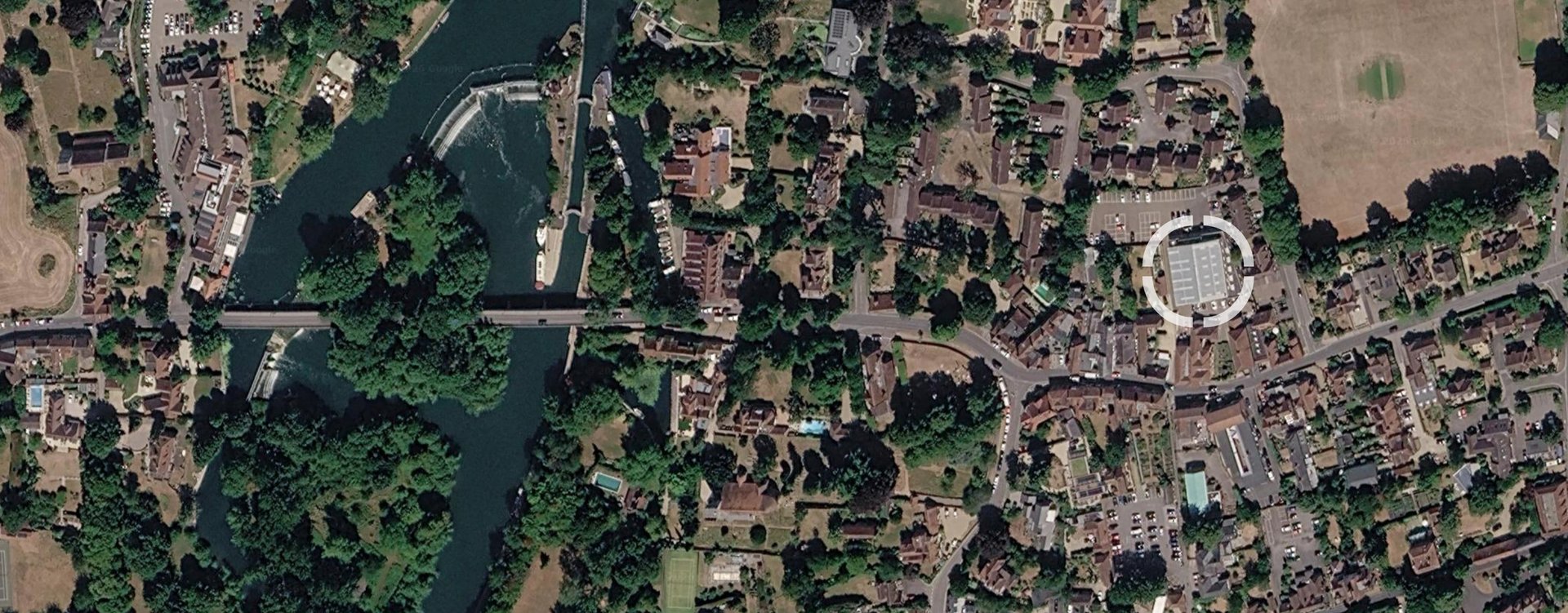
HQ ADDRESS
Thames Court, Goring, Oxfordshire, RG8 9AQ, United Kingdom
CONTACT US
hello@orbastro.com